November 11, 2025
Integrated Microwave Assemblies for Extreme Environments: Meeting Modern Mission Demands
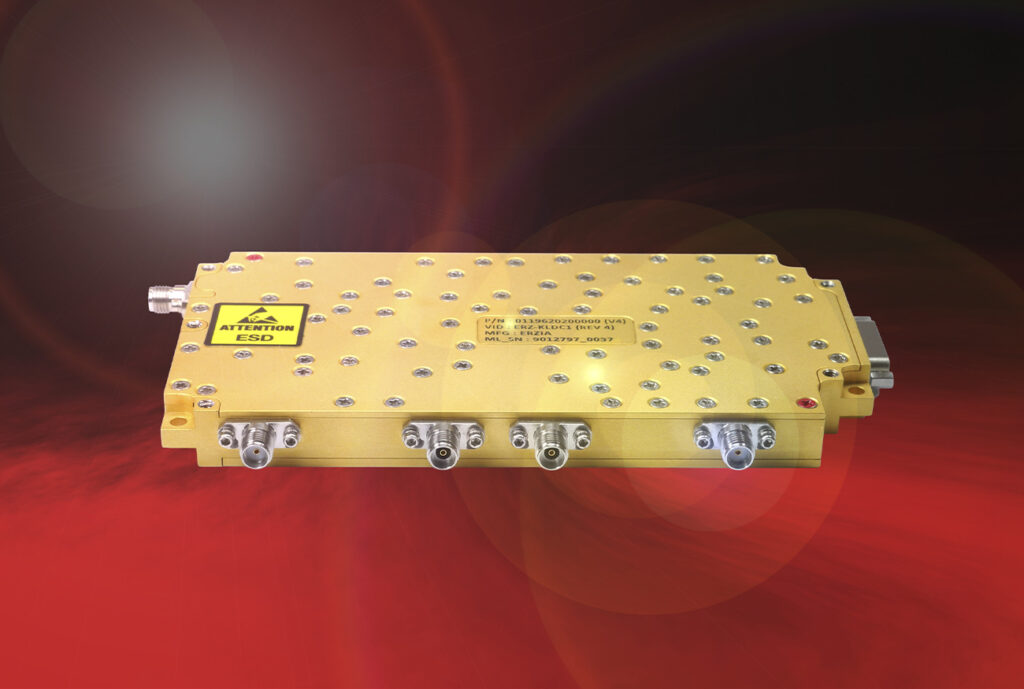
Key Takeaway: As defense, aerospace, and satellite systems evolve, reliability under extreme conditions has become a defining challenge for RF and microwave design. Integrated microwave assemblies address this by combining multiple functions into compact, rugged subsystems engineered to maintain stable performance through temperature shifts, vibration, and radiation exposure.
The Reliability Race Pushes Microwave Assemblies to New Limits
Aerospace, defense, and satellite systems are pushing hardware further than ever—into higher frequencies, smaller footprints, and harsher environments. The demand for components that can perform and survive in those conditions is driving new attention to integrated microwave assemblies (IMAs).
- The global IMA market reached roughly $1.8 billion in 2024 and is projected to hit $2.6 billion by 2029, a 7.6% CAGR, according to market research.
- That growth reflects not just higher RF performance demands but a shift toward integrated, rugged subsystems that reduce assembly complexity and improve reliability.
- Every dB of gain or fraction of a watt now comes with a new layer of environmental stress—thermal extremes, shock, vibration, and radiation.
In other words, as integration accelerates, reliability has become the defining metric of success. The assemblies inside modern radar, communications, and electronic-warfare systems must maintain phase stability and power integrity not only in controlled test chambers but through years of operational stress.
Integrated microwave assemblies built for extreme environments are emerging as the answer—compact, repeatable, and qualified subsystems that merge amplifiers, filters, switches, and converters into a single rugged module ready for the field.
What Are Integrated Microwave Assemblies?
An integrated microwave assembly (IMA) combines multiple RF and microwave components—such as amplifiers, filters, mixers, oscillators, and switches—into a single compact module. The result is a subsystem that replaces several discrete circuit boards with one rugged, pre-aligned unit.
Common IMA configurations include low-noise and high-power amplifiers, up/down converters, beamformers, RF front ends, and switched filter banks. Each is tailored to specific functions within radar, communications, or electronic warfare systems.
Key advantages include:
- Reduced insertion loss by minimizing interconnects
- Smaller footprint and lighter weight compared to discrete assemblies
- Improved reliability and repeatability, thanks to consistent manufacturing and environmental qualification
But integration introduces new challenges. The closer those components sit together, the more tightly linked their thermal behavior, mechanical stability, and RF isolation become. Reliability now depends as much on packaging, materials, and assembly precision as on circuit performance.
Engineering Rugged Microwave Assemblies for Harsh Conditions
Thermal, mechanical and radiation challenges
Environmental stressors impose significant demands on IMAs. Consider the following typical conditions:
- Operating temperature spans from -40ºC to +85ºC (or more in space missions)
- Mechanical vibration and shock from launch, flight, or mobile platforms
- Radiation exposure (in space or high-altitude) or high-electromagnetic interference zones
- Thermal cycling and vacuum conditions for satellite or airborne usage
The design must manage power dissipation from amplifiers inside the assembly, maintain gain and phase stability across temperature, and ensure that mechanical stress does not degrade performance over life. Packaging and material choices, thermal interface design, and mechanical support all matter.
Amplifiers at the core of IMAs
Within many IMAs, amplifiers provide the key functional blocks:
- Low-Noise Amplifiers (LNAs) boost weak received signals while maximizing Signal to Noise Ratio (SNR)
- High-Power Amplifiers (HPAs) deliver the transmitter power output required for radar, EW or SATCOM links.
- Driver amplifiers, mixers and switches may be combined to form up/down converters, RF front-ends or beamformers.
- Mechanical housing is part of the RF design maximizing RF signal propagation while reducing interferences between different elements of the assembly.
Because these amplifier blocks generate heat, require stable supply rails, and often drive impedance-sensitive interfaces, their integration into a rugged module demands matching thermal, mechanical and RF design simultaneously. The packaging around the amplifier becomes as important as the amplifier itself.
Integration trade-offs engineers face
When specifying IMAs for extreme environments, key trade-offs appear:
- Electrical performance (gain, noise, bandwidth) vs. mechanical robustness
- Thermal management (heat load, dissipation) vs. size, weight, power (SWaP) constraints
- Materials and enclosure design (e.g., aluminium vs. titanium vs. composite) vs. cost and manufacturability
- Qualification (MIL, aerospace, space) vs. development schedule.
Meeting these requires a holistic design mindset—where the IMA is treated as a system rather than a collection of discrete parts.
What Modern Programs Expect from High-Reliability RF Systems
Program managers and system integrators increasingly demand the following when selecting IMAs:
- Shorter development cycles coupled with traceable qualification data
- Modular architectures that support re-use across platforms
- Proven reliability in harsh environments (thermal cycling, vibration, radiation)
- Compact, lightweight packages with minimal interconnect loss
- Consistent repeatability from prototype to production
As the market data shows, growth in the IMA sector is driven by increasing need for high-frequency, compact and integrated subsystems across defence, satellite and communications. When a supplier can demonstrate those capabilities, integrators gain confidence and reduce program risk.
Why ERZIA is the Partner for High-Reliability RF Integration
ERZIA has combined decades of amplifier, converter and system-level experience to deliver IMAs engineered for demanding platforms.
- Flight-qualified amplifier heritage: decades of experience with LNAs and HPAs in aerospace, satellite and EW systems.
- Comprehensive IMA product suite: up/down converters, beamformers, RF front-ends, switched filter banks and switching matrices—designed for airborne, ground, naval and satellite platforms.
- Robust qualification and manufacturing: every module is designed for environmental resilience (thermal cycling, vibration, EMI/EMC), and manufacturing is controlled under ISO 9001/9100 quality systems.
When mission demands call for compact, integrated microwave assemblies that survive thermal extremes, mechanical shock and life-of-platform reliability, ERZIA delivers a partner-grade solution.
Integrated Microwave Assemblies Engineered for Long-Term Reliability
Selecting an IMA must go beyond “Will it meet the specs?” and move to “Will it sustain performance under mission stress?” A few practical advantages from a mature IMA supplier:
- One enclosure, fewer interconnects, lower risk of board-level failure
- Mechanical and thermal design optimised for life-cycle, not just bench test
- Integrated amplifier blocks matched across module interfaces, reducing mismatch loss and improving phase/gain stability
- Production consistency and traceable build records that support qualification and field reliability
With these factors aligned, each IMA delivers field-ready reliability throughout its mission life. Building on that foundation, ERZIA’s heritage and integration expertise help program teams reduce risk, accelerate schedules, and maintain confidence in subsystem performance over time.
Contact ERZIA
If your system requires integrated microwave assemblies designed for the toughest thermal, mechanical or radiation environments, contact ERZIA’s engineering team today to discuss your application, platform and performance requirements.
FAQ: Common Questions About Integrated Microwave Assemblies
1. How do integrated microwave assemblies differ from standard RF components?
Integrated microwave assemblies combine multiple RF and microwave functions—such as amplification, filtering, and switching—into a single, compact module. This reduces interconnect loss, improves reliability, and simplifies qualification compared to using separate components.
2. How are integrated microwave assemblies tested for long-term reliability?
Each assembly is verified through temperature cycling, vibration, shock, and EMI/EMC testing. These environmental tests confirm consistent performance across mission lifetimes in space, naval, and airborne platforms.
3. Why are integrated microwave assemblies critical in aerospace and defense applications?
They provide compact, repeatable performance in harsh environments where reliability and size constraints drive design decisions. By combining multiple RF stages into one rugged package, IMAs support smaller, lighter, and more dependable radar, communications, and electronic warfare systems.
Read More